


Business
Rethinking business models for a polycrisis world
Whether the impact of the Iran war or AI, CIMA's new white paper sets out why traditional business models are no longer fit for purpose. Leaders at CIMA Dr Jeremy Osborn and Andrew Harding elucidate on what can be done about it.
The Chartered Institute of Management Accountants new white paper, Reframing Business Models for a Sustainable World, warns that organisations must be prepared to continually rework their business models as global risks accelerate and interact in unpredictable ways.
From geopolitical instability and rapid advances in artificial intelligence to climate change, biodiversity loss, and demographic shifts, businesses are operating in an era of overlapping and interconnected crises – often described as a “polycrisis”. The report argues that traditional, linear business models constructed through an inside‑out, micro‑stewardship approach are no longer sufficient to navigate this environment.
Instead, the white paper makes the case that sustainability – as integral to responding to polycrisis – is no longer a side activity or compliance exercise, but a core business model issue. Organisations that fail to connect financial performance with their impact on society and the environment risk undermining their own long‑term viability.
To support organisations through this shift, the whitepaper brings together concepts, perspectives, practical frameworks and actionable recommendations to help organisations create long‑term value in a more uncertain and interconnected world.
The white paper helps organisations to:
- Build literacy in polycrisis concepts and stay attuned to emerging research and thinking
- Understand how systemic risks such as climate change, nature loss, social inequality and geopolitical instability are interconnected
- Identify emerging patterns and feedback loops, and assess how they affect businesses, society and the biosphere
- Apply a macro‑stewardship lens and adopt a systemic risk management approach to inform future‑focused scenarios, transition plans and business model adaptation
- Design solutions that address polycrisis factors while strengthening long-term resilience and enabling antifragile business models
- Guides finance teams on how to drive insight into enterprise-wide action and value creation
Reframing Business Models for a Sustainable World explores how shifting from a resilient approach – focused on risk management – to antifragile thinking that allows organisations to strengthen their business models in the face of unpredictable disruption, can support long‑term value creation. It also examines what a macro‑stewardship lens means in practice, putting ethics and the public good first, and the skills and mindset changes finance leaders need to support value creation.
This paper brings together a collection of approaches and perspectives that can help organisations evolve their business models to meet the challenges of the future. The competencies and skill sets of management accountants, combined with the expanding mandate of the finance function, place the profession in a unique position to help reframe business models for long‑term, sustainable value creation. We have both the responsibility and the opportunity to help shape the future.
The report findings underline a timely message for finance leaders: business models must recognise systemic risks, long‑term impacts, and the reality that sustainability is now hard‑wired into how value is created. Moving away from linear‑thinking and anchoring decisions in the context of antifragile business models can help connect performance with purpose and create long‑term value for investors and other stakeholders.
Dan French,
founder and CEO, Consider Solutions
The future that is unfolding isn't one where finance and accounting professionals are replaced – but one where their responsibilities will change. Success in this transition depends on making clear assessments of where AI will add value, establishing clear policies and governance in use, and the cultivation of skills that complement technical capabilities.
ACCA expects that coming years will see organisations develop more integrated workflows based on the principle that AI adoption is not just about distinguishing high versus low-value activities – but focusing on outcomes, quality and value.
Only a minority of finance and accounting teams have implemented AI solutions – but these resources are widely available, and organisations are reviewing opportunities and workforce needs.
AI adoption is expected to accelerate in coming years, especially as our data shows investment on AI initiatives is increasing, and widespread cloud adoption provides a crucial foundation for AI implementation.
The profession is still in the invention and adoption stage of AI, as demonstrated by investment data and current adoption/usage statistics. And the profession is embracing the learning and employment challenge offered by AI as shown by the recently announced changes to the ACCA Qualification which embraces emerging advances in technology and sustainability.
The report adds that widescale use of a general-purpose technology, like AI, may take longer than anticipated.
Dr Jeremy Osborn, FCMA, CGMA, FCPA (Aust.), Global Head of Sustainability, Chartered Institute of Management Accountants (CIMA)
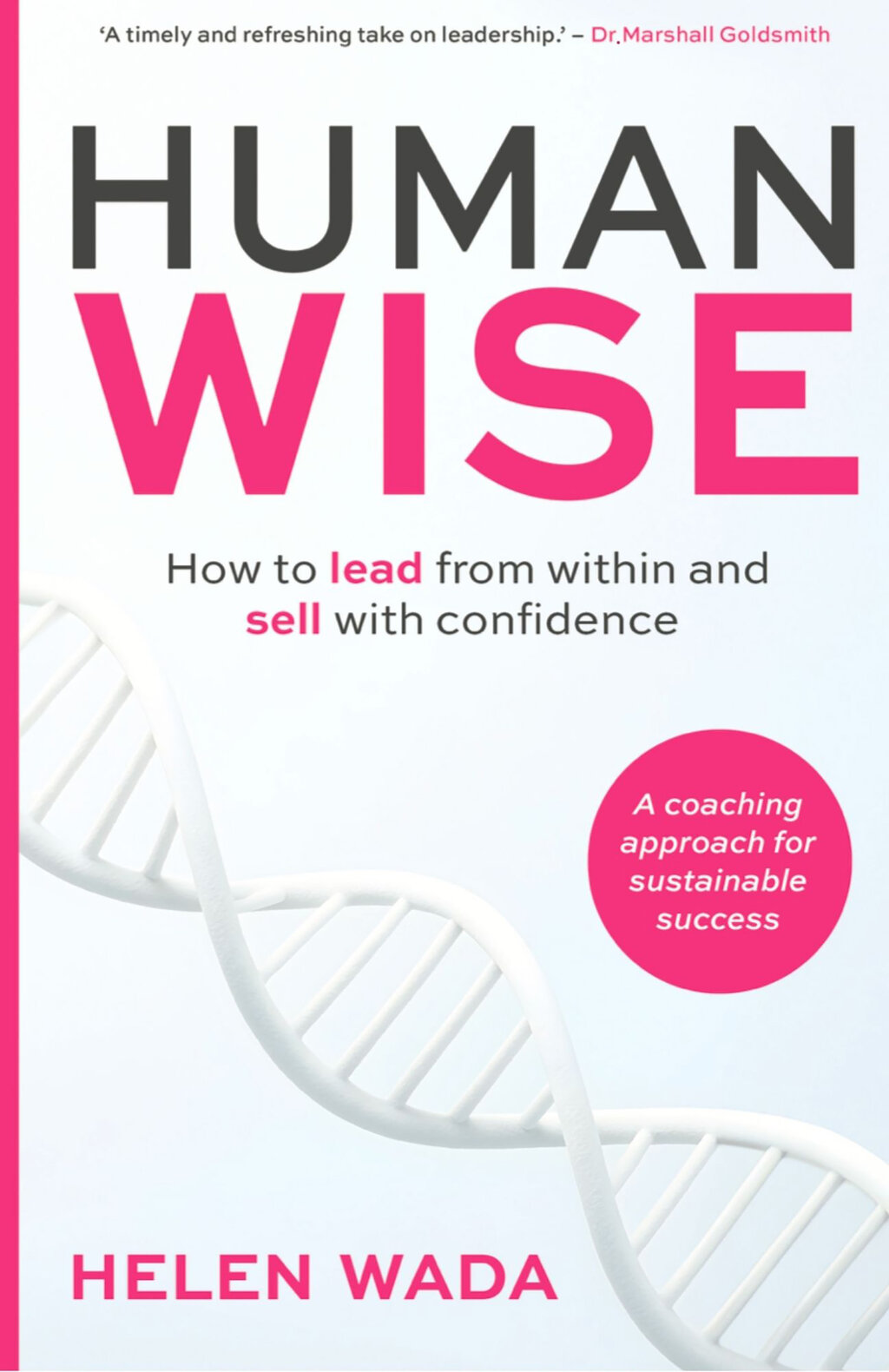
The professional services industry is shifting
Many are finding that in today’s climate, winning work, building relationships and sustaining client trust feels harder than it used to. Clients are more informed, problems are more complex, and decisions take longer.
The environment has shifted, but the way many professionals show up and build business opportunities has not.
At the same time, there is pressure on leaders like never before. They are expected to embrace new technologies and ways of working, develop their teams in a hybrid environment, and create cultures where people feel engaged and committed.
They are also being asked to spend more time in the market with clients, opening doors to new opportunities, while leading with courage, clarity and compassion.
And yet, many professional experts are not taught how to build business or navigate commercial conversations until it is almost too late in their career. They find themselves stepping into partnership or senior leadership roles and being told that progression now depends on their ability to grow a client base and build a business case.
Main image: left, Andrew Harding, FCMA, CGMA, chief executive – Management Accounting, The Chartered Institute of Management Accountants (CIMA); right, Dr Jeremy Osborn, FCMA, CGMA, FCPA (Aust.), global head of sustainability, The Chartered Institute of Management Accountants (CIMA). Main video supplied by selamiozalp/Creatas Video via Getty Images