

C-Suite Q&A
HLB Vision and future Strategy anchored by client engagement
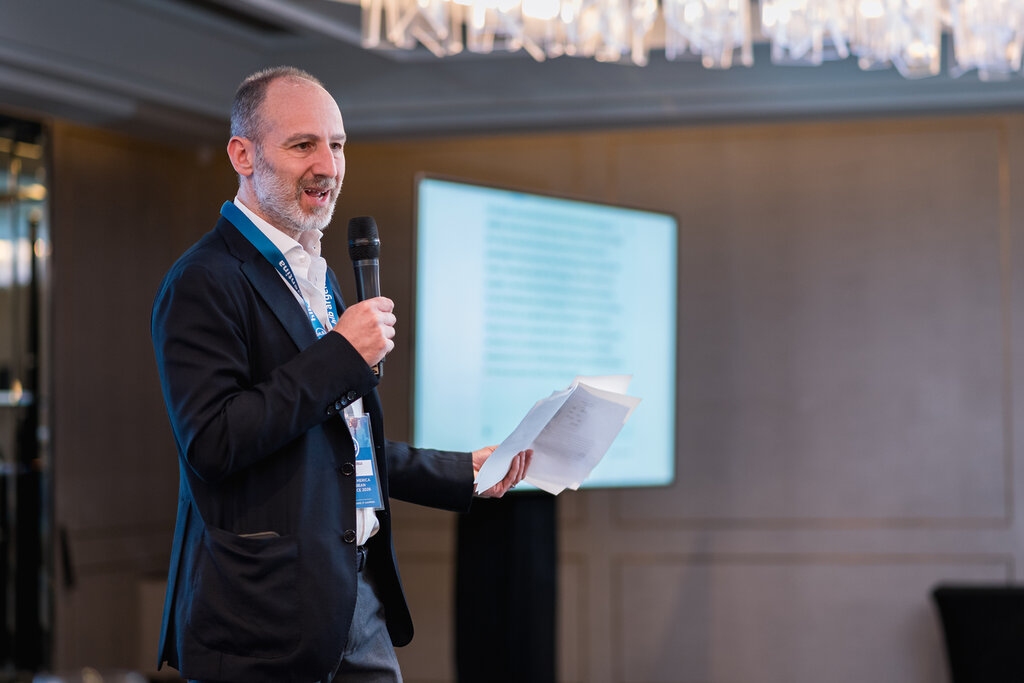
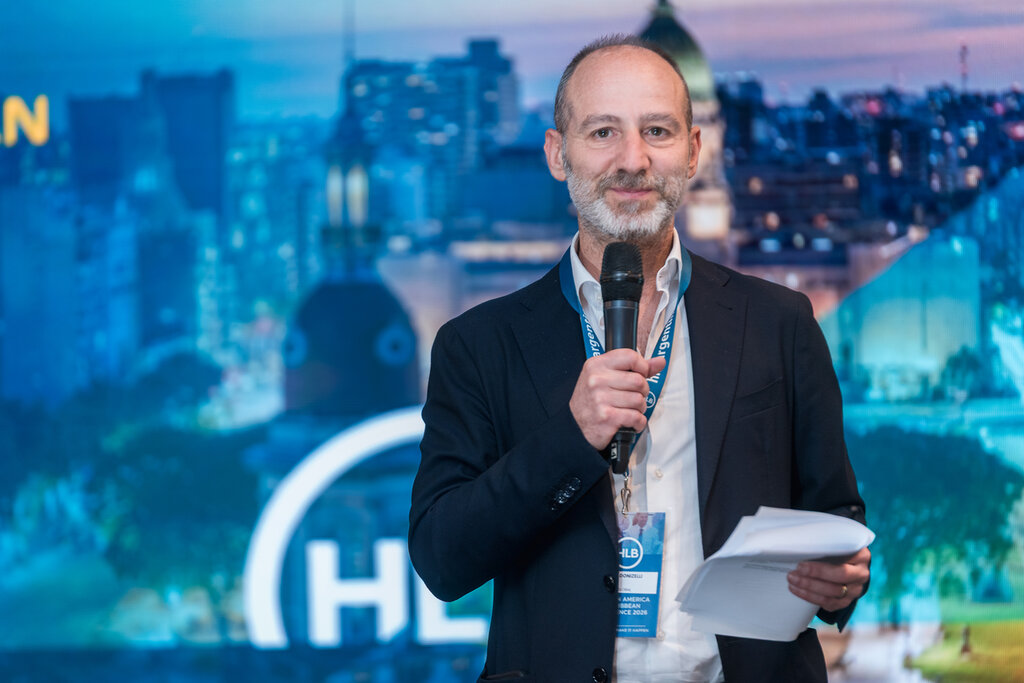
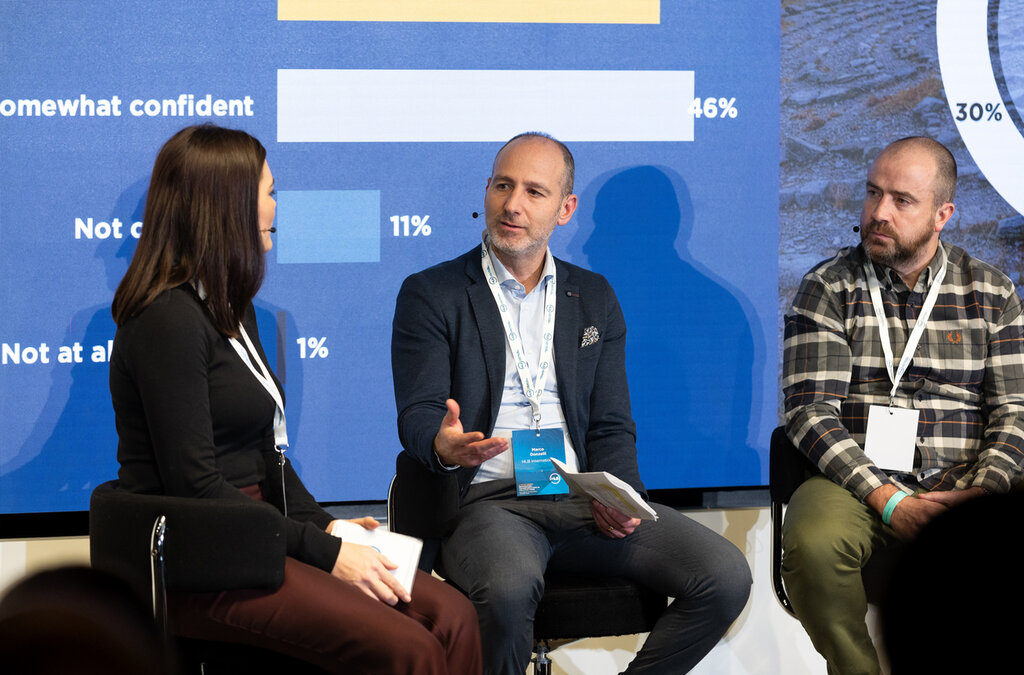
CEO Marco Donzelli met Zoya Malik, editor-in chief, International Accounting Bulletin to discuss HLB’s company strategy and his growth plans for the future of the network.
Phil Verity, Member of the Global Network Board and former CEO of Forvis Mazars in the UK, was the winner of the IAFA 2025 Personality of the Year award. He has been an instrumental leader in Forvis and Mazars joining forces, an unprecedented move that created one of the most impressive global networks the accounting profession has seen in decades.
Zoya Malik (ZM): What elements of HLB’s current strategy have been the strongest drivers of growth and where do you see the biggest opportunities to build further momentum?
Marco Donzelli (MD): The biggest drivers of growth have been inorganic. M&A and external funding have fuelled the growth of individual member firms, both in the size of the firms as well as their investment in areas such as tech that enable growth. I believe some big opportunities sit in smart integration of technology combined with strong client experience capabilities to drive differentiation. In the future, services will be more personalised, and firms will deepen their client relationships, which in turn will unlock pricing power and cross-selling potential.
Jason Parker, CEO, Parker Russell International
Dean Beale, executive director at CPIA, giving a talk on the 2025 Audit Trust Index.
ZM: As market conditions evolve, how will HLB balance protecting its core strengths while investing in new growth areas?
MD: We will balance protecting our core strength while investing in new growth areas by being deliberate about what must be preserved and what must evolve. Our core strengths are trusted client relationships, local market expertise and sector-led services. This will always remain the foundation. Investment will be made in areas that amplify these strengths, such as AI-enabled delivery, industry specialisation and cross-border collaboration.
ZM: Looking ahead three to five years, what strategic shifts will be the most important for HLB to remain competitive and accelerate growth?
MD: Looking ahead, the most important shifts will centre on scaling what differentiates HLB globally while strengthening local execution of our member firms. This translates into a strong focus on innovation mindset and value creation, supported by new technology across services and operations, and building a more consistent, high-quality client experience across our network. These are all key strategic themes we build into our network strategy.
ZM: In the current environment, why is innovation no longer optional, but essential for sustainable growth?
MD: There are two main reasons why innovation is critical for our future growth ambitions:
- The pace of change in many parts of the world is overwhelming. If we stand still, it’s likely the market will pass us by. We need to be more agile in how we adapt, and the only route to true organisational agility is continual innovation. This gives us the opportunity to stay one step ahead of competitors who may find it harder to evolve.
- The ability for other companies to copy what we do, disrupt us, and deliver similar services at a lower cost has never been greater. Emerging technologies mean smaller organisations can now create premium services at a price point that challenges our current business model. We need to develop diversified offerings, and build multiple revenue streams to maintain and grow our position in the market.
Dean Beale, executive director at CPIA, giving a talk on the 2025 Audit Trust Index.
ZM: What practical advice would you give to organisations of any size that want to build a stronger innovation mindset across their teams?
MD: Building an innovation mindset starts with involving employees in shaping direction. Their insight drives meaningful change and engagement. Focus on solving real problems, validating ideas and encouraging collaboration across silos. Reinforce this with transparent communication, visible progress and opportunities to contribute, so that innovation becomes something people actively participate in.
ZM: How can finance and accounting leaders help create a culture where innovation is encouraged, measured, and linked to commercial outcomes?
MD: Finance and accounting leaders are in a stronger position than they often realise to shape a culture where innovation is genuinely encouraged, measured, and tied to commercial outcomes, but it starts with recognising and rewarding the right behaviours when you see them. Too often, organisations only celebrate the big outcomes, the launched product or the revenue win, and miss the quieter contributions that made it possible in the first place. The process matters just as much as the result. Pay attention to the people who are rolling up their sleeves on problem-solving, stepping beyond the boundaries of their day jobs, and helping colleagues move ideas forward. When you visibly showcase those behaviours, you signal what good looks like, and more people start to lean in. Leadership has a real role to play here too, and it shows up in the everyday choices: sharing openly, bringing in ideas and perspectives from outside the organisation, carving out genuine time for innovation and making sure the resources, technology, and innovation pipelines are there to support good ideas going somewhere. Linking innovation directly to performance reviews is what gives it teeth, because simply setting KPIs and revenue targets and hoping innovation follows on its own doesn't work, it never has. People respond to what gets noticed, measured, and rewarded.
ZM: As identified in HLB’s Survey of Business Leaders, reinventing transformation in volatile times shows leading businesses are reshaping operating models, deepening customer focus, and accelerating digital transformation. Which of these do you believe creates the greatest competitive advantage today?
MD: In Q4 of 2025, we surveyed 1,100+ leaders surveyed worldwide. From previous years, we saw a great shift towards customer focus as key to strong competitive advantage, away from a focus on cost-management and operations. Leading organisations use efficiency and technology to serve clients better, deepen relationships and drive profitability. That alignment between capability and client value is where authentic advantage is created.
ZM: With 88% of leaders confident in their companies’ ability to grow revenue over the next 12 months, what is driving this renewed confidence despite continued uncertainty?
MD: Based on year-on-year trends analysis, organisations have strengthened operating models, improved profit margins, applied AI more selectively and shifted toward customer-led growth. Risk remains elevated, but leaders feel better equipped to respond. That is why we see confidence is rooted in capability and agility. Leaders have grown stronger in execution, set clearer priorities and gained greater organisational resilience.
ZM: How can organisations move from simply reacting to disruption toward proactively using volatility as a catalyst for growth?
MD: We found that growth comes from disciplined adaptability, not reactive speed. Leading organisations are shortening planning cycles, linking technology investment to measurable outcomes, strengthening operating models and anchoring strategy in customer insight. The shift is from chasing change to shaping it, using volatility to prioritise better decisions, sharper execution and more focused investment.
ZM: Leaders expect stronger global growth in 2026, yet risk concerns are at record highs. How should businesses navigate growth opportunities while managing geopolitical and trade uncertainty?
MD: It is not easy to balance factors leaders have no control over. However, leaders who treat growth and risk management as parallel disciplines are best positioned for success. Based on the HLB Survey of Business Leaders findings, we see leaders who shorten planning cycles, focus on supply chain resilience, and invest selectively in technology and cybersecurity are most likely to be high performing.
Dean Beale, executive director at CPIA, giving a talk on the 2025 Audit Trust Index.
ZM: Cybersecurity is the leading concern, and top performers are significantly increasing investment in securing customer data. How critical is trust in data protection to future growth strategies? to - How critical is trust in data protection to future growth strategies?
MD: It is fundamental to growth. Strong data protection underpins client engagement, enables AI and digital expansion, and supports commercial performance. Therefore, cybersecurity is vital, recognised and a top concern. It is also a big opportunity for us as accountants to help clients understand, trust and protect their data.
ZM: Top performing corporates globally are investing more in AI powered decision making, adaptive planning, and AI for R&D. Where do you see the biggest value from AI in driving business performance? To - Where do you see the biggest value from AI in driving business performance?
MD: We believe AI creates the most value when embedded in service delivery and across the operating model. Where AI was mostly used in customer-facing use-cases such as in marketing and sales, firms should now aim for a deeper integration. This can lead to more time for value-adding client work and better client relationships, while boosting overall efficiency.
Main image: Marco Donzelli, global CEO of HLB International