

Well-being
Breaking The Silence around 3M
ICAS’s research and report highlights how women in accounting often feel isolated and fearful about being open about their experiences with “3M” - menstruation, menopause, and miscarriage, wherein these often-difficult experiences continue to shape women’s career progression and wellbeing. Experts at ICAS offer a summary of the findings.

New independent research commissioned by ICAS (Institute of Chartered Accountants of Scotland) exposes the persistent stigma and silence surrounding Women’s Health and Wellbeing (WHW) in the accounting profession.
The study reveals that while overall trust in the profession remains high, nearly three in four professionals report experiencing discriminatory or exclusionary behaviour in the workplace. The findings highlight that cultural, environmental, and policy gaps still limit progress toward true inclusion.
Through interviews, research analysis, and a review of workplace policies, ICAS highlights the urgent need for evidence-based reforms and stronger support for women’s health and wellbeing at work. The report’s authors and research team included academics from Edinburgh, Heriot Watt, and Newcastle Universities.
Sam Louis,
CEO Praxity Alliance
Technology is a key driver for the shift to advisory, but the transformation is deeply rooted in cultural and behavioural change. Professionals are expected to anticipate future challenges and think systemically, communicate effectively, and engage in lifelong, adaptive learning more than ever before. Human-centric skills such as empathy, trust, and authenticity are increasingly seen as essential to leadership and client relationships.
Intelligent tools are reshaping how learning is delivered and managed, making it more personalised, accessible, and integrated into daily workflows. Drawing on the experience of member firms across the Praxity Alliance, we investigate what it means to be advisory-ready in a world steadily shaped by generative AI.
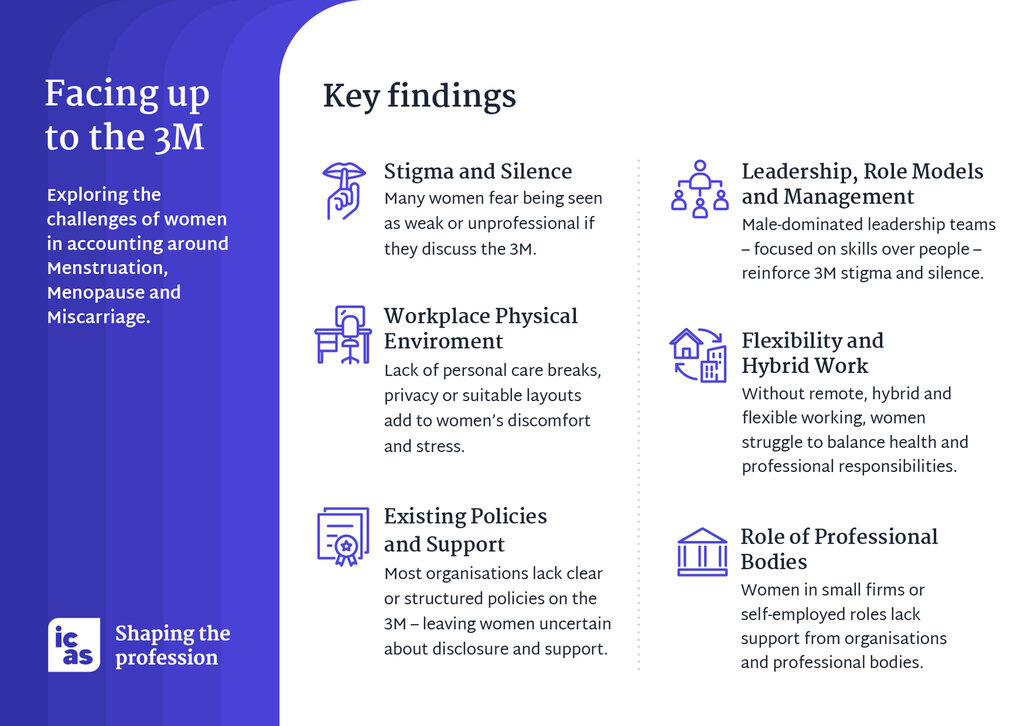
Key Findings
- Culture of stigma and silence: Many women feel isolated and fearful of being open about the 3M, often making career decisions based on these experiences.
- Leadership and role models matter: Male-dominated leadership teams reinforce silence and slow progress. More empathetic, people-focused leadership is essential.
- Workplace design and environment: Lack of privacy, inadequate breaks, and unsuitable office layouts increase stress and discomfort.
- Flexible work patterns: Rigid working structures can make managing the 3M harder, adding to anxiety.
- Policy gaps: Few organisations have meaningful 3M-related policies; and existing ones are often tokenistic.
- Role of professional bodies: Rarely seen as a source of support yet uniquely positioned to lead sector-wide change - especially for self-employed professionals and those in SMEs.
Lord Phillip Hammond at an event
Call for Change
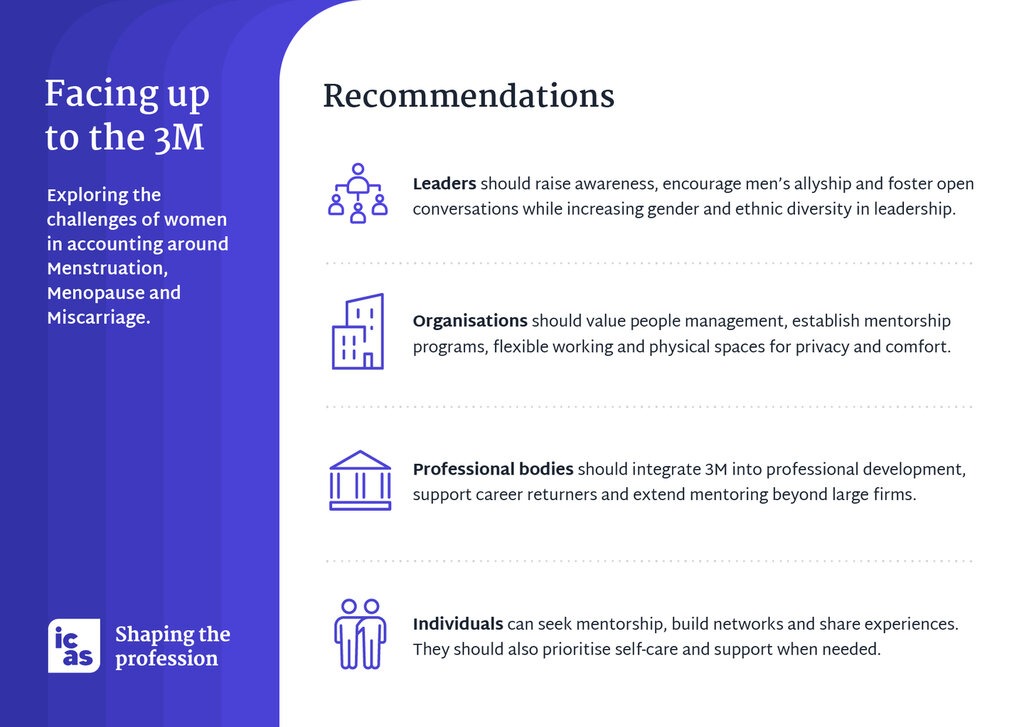
ICAS’ 3M report calls for immediate and practical action across the profession, including:
- Supportive leadership that normalises open conversations, mentorship, awareness-raising, and the encouragement of male allies.
- Flexible working arrangements and improved physical workspaces to support wellbeing and comfort.
- Inclusive policies that go beyond gestures to show real organisational commitment.
- Proactive leadership from professional bodies to champion wellbeing, integrate 3M awareness into mentoring, CPD, and equality initiatives, and set new standards for inclusion across the sector.
James Baird CA, Chair of ICAS’ Shaping the Profession programme stated: “This research is about shaping solutions, not just finding problems. It was designed to shine a light on issues that have been ignored for far too long. Menstruation, menopause, and miscarriage affect every workplace, yet they’re rarely discussed openly. By breaking that silence, we can create a profession where women feel supported and valued - not sidelined because of natural life experiences.”
To find out more information about the 3M report and ICAS’ Shaping the Profession (StP) programme click here.
Lord Phillip Hammond at an event
Accounting and Advisory: Top Performance Management Tools in 2025
Regional Adoption Trends and Strategic Fit
As accounting firms worldwide shift toward advisory services, performance management systems are becoming critical enablers of talent development, strategic alignment, and operational agility. The choice of platform often reflects regional preferences, firm size, and the maturity of digital infrastructure.
The following table outlines the most widely adopted performance management tools by region in 2025, based on industry benchmarking and software usage trends
| Region | Commonly Used Tools |
| North America | Lattice, Paycor, Synergita, BambooHR, PerformYard, Workday, Engagedly, Reviewsnap |
| Europe | Lattice*, Personio, Leapsome, CultureAmp, Workday, SAP SuccessFactors, Namely* |
| Latin America | Sprad Growth, Paycor*, CultureAmp, Workday |
| Middle East/Africa | Sprad Growth, CultureAmp, Workday, SAP SuccessFactors |
| Asia Pacific | Sprad Growth, Leapsome, CultureAmp, Workday, SAP SuccessFactors |
| *Tools marked with an asterisk are primarily used by firms with US headquarters operating internationally. | |
These platforms vary in complexity and cost, with mid-sized firms often favouring leaner, more customisable solutions like Sprad Growth, PerformYard, or Monday.com, as seen in JA del Rio’s case. Larger firms tend to adopt enterprise-grade systems such as Workday or SAP SuccessFactors, which offer deeper integration across HR, finance, and operations.
The regional distribution reflects not only software capabilities but also strategic priorities. For example:
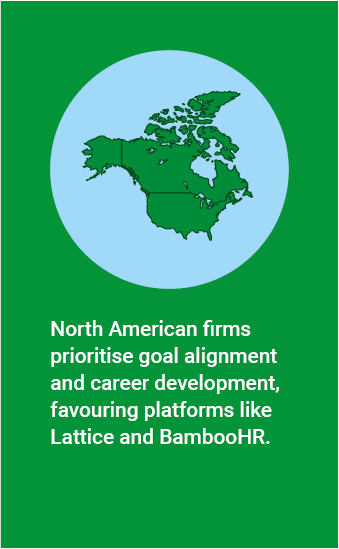
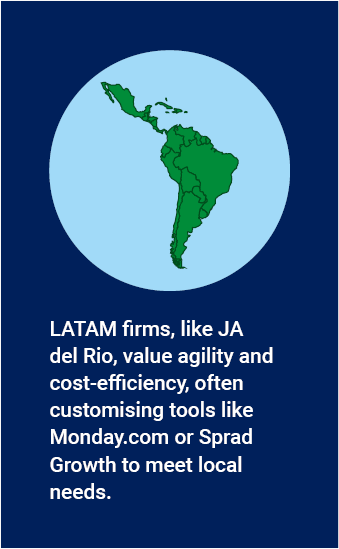
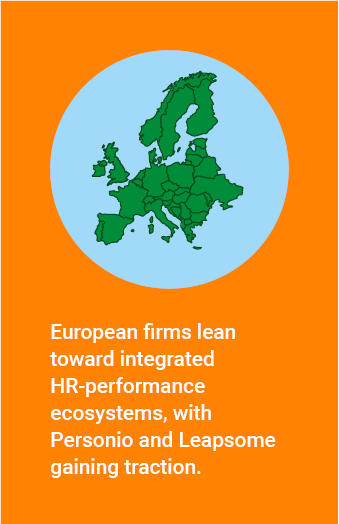
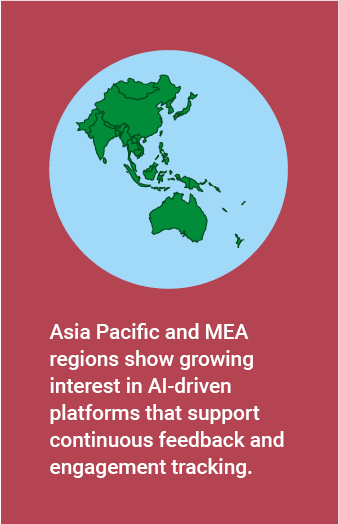
This diversity underscores the importance of local relevance and strategic fit when selecting performance management tools across the Praxity Alliance.
Main video supplied by fedrelena/Creatas Video+ / Getty Images Plus via Getty Images