Rankings Report: Panama
Regional ambitions boost Panama’s economy
Efforts to improve Panama’s international reputation are paying off as it positions itself as a regional hub. Che Golden reports.
The last time IAB reported on Panama, the country had been removed from the FATF grey list and was improving its business reputation through new cybercrime laws. While this was obviously great news, the current spike in foreign investment that Panama is enjoying has been brought about by a number of factors.
“Panama’s removal from the FATF grey list marked a turning point in strengthening international confidence in the country and has been one of the factors contributing to an improved investment climate over the past 12 months,” said Maycquel Mendoza, managing parter of Mendoza & Asociados, a PrimeGlobal member firm. “This progress has been accompanied by an active agenda of economic integration and investment promotion.”
Maycquel Mendoza, managing parter of Mendoza & Asociados, a PrimeGlobal member firm
Panama has strengthened its trade relations with the Mercosur countries, expanding opportunities for commercial exchange and for attracting companies interested in using the country as a regional platform for Latin America and the Caribbean. Likewise, new economic cooperation agreements have been promoted and the presence of binational chambers of commerce has been strengthened, fostering closer business ties with strategic markets in Europe, Asia, and the Americas.
“The Government has continued to promote the development of new free trade zones,” said Mendoza. “The expansion of special investment regimes, offering tax and operational incentives that have proven particularly attractive to companies in logistics, manufacturing, technology, e-commerce, and corporate services. These initiatives complement the success of already well-established regimes such as the Panama Pacifico Special Economic Area and the Multinational Company Headquarters (SEM) regime, reinforcing Panama’s position as a regional business hub.”
Additionally, the modernisation of the legal framework on cybersecurity and cybercrime has strengthened legal certainty for companies operating in digital environments, an aspect increasingly valued by international investors, particularly in the financial, technology, and services sectors.
All of these changes mean a business opportunity for local accounting firms.
“International investors are now conducting much more rigorous due diligence than in the past,” said Milton Chambonett, general director of MGI Chambonett y Asociados. “They are no longer attracted solely by Panama's tax and geographic advantages; today they demand high standards of corporate governance, economic substance, regulatory compliance, transparency, internal controls and high-quality financial reporting.”
Milton Chambonett, general director of MGI Chambonett y Asociados
For audit and advisory firms, this represents an important opportunity, as companies increasingly require specialised advice to establish and operate their investments in accordance with international standards.
Panama's strategy of positioning itself as a regional hub is also changing client expectations. “International companies are no longer looking solely for audit or accounting services,” said Chambonett. “They increasingly expect integrated professional solutions.”
Reform continues apace. The most significant regulatory development has been the enactment of Law 526 of 2026 on Economic Substance, in May. The legislation introduces economic substance requirements Panamanian entities belonging to multinational groups that receive specific categories of foreign-source passive income, including dividends, interest, royalties, capital gains and real estate income.
“It also modernises Panama's permanent establishment rules and introduces additional anti-abuse provisions while preserving the country's territorial tax system,” said Chambonett. “This represents one of the most important developments in Panama's international tax framework.”
Auditing has also been getting an overhaul, with the issuance of Rule 3-2025 by the Superintendency of Banks of Panama, which updates the framework applicable to external audits of banks. The regulation incorporates elements related to ISQM 1, communication with regulators and those charged with governance, and regulatory access to audit documentation. This reflects the increasing importance of audit quality and regulatory oversight within the financial sector.
Panama has also continued strengthening its economic substance framework, reinforcing requirements applicable to certain entities to demonstrate adequate economic presence within the jurisdiction. These developments are aligned with broader international efforts aimed at promoting transparency, preventing base erosion and profit shifting, and ensuring that business structures are supported by genuine economic activity.
“Another important area is the continued implementation of quality management requirements across the profession,” said Gabriel Holness, managing partner of Baker Tilly in Panama. “Audit and assurance firms are increasingly focused on the practical application of ISQM 1 and ISQM 2, requiring more robust governance structures, risk assessment processes, engagement quality reviews, and monitoring activities.”
Gabriel Holness, managing partner, Baker Tilly, Panama
Panama has also continued strengthening its corporate transparency framework, including measures related to beneficial ownership and regulatory reporting obligations. These initiatives remain important in maintaining compliance with international standards and preserving investor confidence.
“Sustainability reporting is emerging as a key area of focus,” said Holness. “Although the local regulatory framework continues to evolve, companies and professional firms are already evaluating the implications of IFRS S1 and IFRS S2 and preparing for increased stakeholder expectations regarding sustainability-related disclosures.”
At the same time, the tax administration continues its digital transformation through expanded use of electronic invoicing, data analytics and technology-enabled controls, increasing expectations regarding the quality, consistency and traceability of financial information.
While this is creating healthy demand, particularly for specialised services, traditional accounting and statutory audit remain under considerable fee pressure due to intense market competition, according to Chambonett.
“Clients now expect faster response times, greater use of technology, more strategic advice and multidisciplinary solutions,” he said. “At the same time, regulatory requirements continue to increase, requiring firms to devote more resources and professional hours to meeting both national and international standards.”
“This creates an interesting paradox,” he continued. “Clients demand more sophisticated services while often expecting professional fees to remain unchanged.”
However, Mendoza did point out that the recent creation of a reference table of minimum fees for CPA professional services through MICI Resolution 05-2025 also reflects the sector’s efforts to strengthen the value placed on professional services.
Recruitment and retention also remain challenging, particularly for professionals with expertise in IFRS, audit, international tax, data analytics, English, artificial intelligence and cybersecurity. “As a result, firms must invest more heavily in training and professional development,” said Chambonett. “Artificial intelligence and automation are also reshaping the profession, shifting accountants away from routine operational work toward analysis, risk management, strategic advisory services and decision-making.”
Some of the fastest growing areas that Chambonett has seen over the last twelve months include transfer pricing corporate governance and regulatory compliance, outsourcing of CFO services, data analytics and technology risk assessments.
“In particular, the introduction of the Economic Substance Law has generated significant interest among multinational groups and internationally structured businesses seeking to determine whether the new rules apply to them and how they should prepare for implementation,” he said. “We have also seen growing demand for independent investigations involving fund management, procurement, related-party transactions, corporate disputes and potential financial irregularities.”
Despite the uptick in business there is no evidence that Panamanian firms will go down the merger and acquisition path to keep up with demand, however, a trend toward strategic consolidation and the regional integration of professional services has become evident, according to Mendoza.
“A notable example is the regional reorganisation of RSM Central America,” he said. “Member firms of Panama, Costa Rica, Guatemala, El Salvador, Honduras, and Nicaragua were integrated under a regional structure aimed at strengthening the offering of audit, tax, and consulting services for multinational clients operating in Central America.
Another example is Deloitte, which announced the creation of the Central America, Panama, and Dominican Republic Marketplace, a new regional structure designed to accelerate the firm’s growth.”
“The market remains highly competitive,” said Holness. “The principal global accounting networks, regional firms and local practices are continuing to expand primarily through organic growth, talent acquisition, and the development of specialised advisory capabilities.
“While Panama has not yet experienced a substantial wave of consolidation, we expect firms to continue exploring strategic alliances, regional integration opportunities and specialised partnerships as the operating environment becomes increasingly complex and technology-driven,” he said.
For the coming year, Chambonett predicts that technology will be a big disruptor for local firms.
“We believe the profession's greatest transformation will come from technology,” he said. “Artificial intelligence, automation, data analytics and the continued digitalisation of tax administrations will fundamentally reshape the traditional accounting business model.
AI is expected to become a key driver of transformation across the profession.”
Chambonett predicts that if Panama successfully combines its strategic geographic location, logistics platform, international connectivity, economic stability, improving regulatory reputation and highly qualified professionals, it will strengthen its position not only as the logistics hub of the Americas, but also as a leading regional hub for corporate, financial, technological and professional services.
“This represents a significant opportunity for the continued growth of Panama's accounting and advisory profession,” he said.
Holness does not disagree but his outlook for the next 12 months is cautiously optimistic – while there are plenty of opportunities, firms are going to have to invest heavily in the quality of their service.
“For the accounting profession, one of the most important developments will be the continued strengthening of quality management and regulatory oversight,” he said. “Firms will need to invest further in governance, methodology, technology, independence controls and engagement quality processes.”
He also expects continued growth in outsourced accounting services, cybersecurity, digital transformation, internal audit, risk management and regulatory compliance. Sustainability reporting will become increasingly relevant as organisations prepare for evolving disclosure requirements and growing stakeholder expectations. Companies are already assessing the governance, data and reporting capabilities required to support future sustainability reporting frameworks.
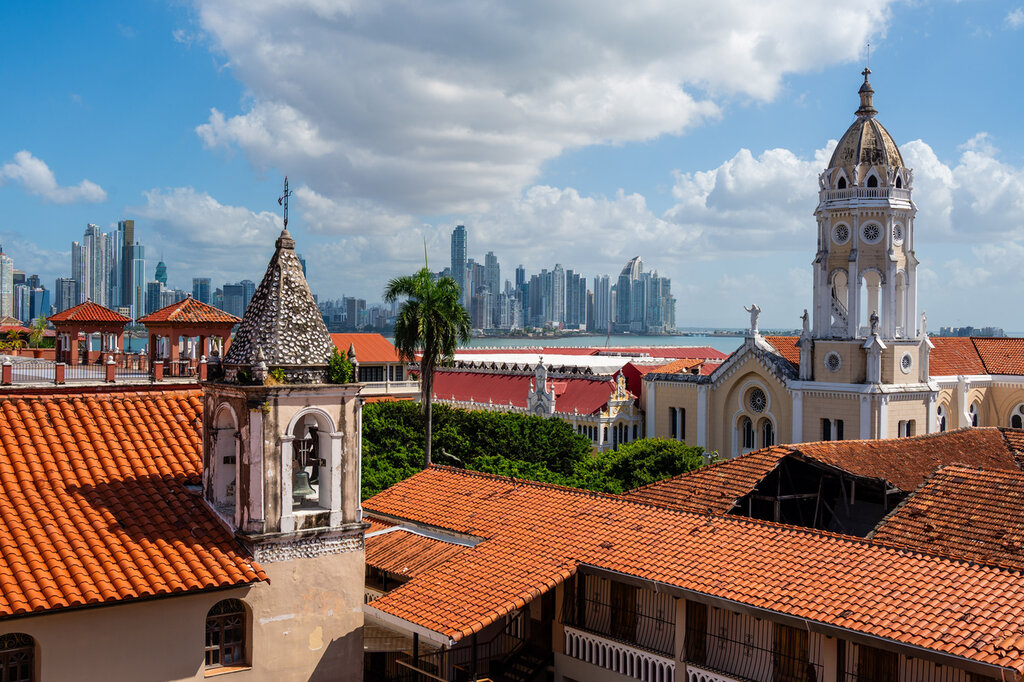
Main image: Historic old town in Panama city with skyline in the background. Credit: Andreas Vogel/Shutterstock.com